WHAT IT TAKES TO BE A GOOD LOBBYIST

​I have reflected on that question over the last year or so as I have moved into partial retirement after more than 30 years in the lobbying business.

​There is no formula to answer the question, but the following thoughts have come to mind.

​1.  A PERSONAL COMMITMENT:  “YOUR WORD IS YOUR BOND” ETHIC

​There is no more critical trait than this one.  At a recent Wall Street Journal CEO Forum, New Jersey Governor Chris Christie, a potential Republican presidential candidate next time around, put it this way:  “No one in this city (Washington, D.C.) talks to each other anymore.  Or, if they do, they don’t speak to each civilly.  They don’t develop relationships.  They won’t develop trust between each other.”

​Governor Christie could have added that, when officials talk, they don’t believe what each other says because there is no “your word is your bond” ethic.

​If you say something, mean it.  Stick by it.  If you have to change your point of view, alert all those to whom you previously spoke that you’ve had to change.  That, alone, will enhance your credibility.

​2.  A PERSONAL STYLE:  PERSEVERANCE

​Over my 30+ years at the State Capitol in Salem, I saw that those who arrived early, remained active during the day and stayed late often got things done.  In the sometimes-awkward nature of lobbying, finding legislators early and late often translated to an important minute or two – a minute or two to make a positive impression on behalf of a client.

​Because lobbying is the business of making a series of positive impressions, finding time to make the first one is critical.  Then, the others can follow – early, mid-day or late.

​3.  A PERSONAL COMMITMENT:  CLIENT EXPERTISE INVOKES LOBBYING

​In the lobbying business, I used to say that it didn’t matter what I thought or whether I agreed with a client.  What mattered was what the client thought.

​I had the good fortune to represent clients over the years with whom I generally agreed or, better put, was allowed to influence their thinking about how to achieve an objective.

​I also was fond of saying that, with regard to a client’s interests, I was “an inch deep and a mile wide,” while the client was a mile deep in its understanding of its issues.  The point?  It is that a client’s perspectives, words and deeds are critical to representing that client’s interests.  What a client wants or does not want from the legislative process should dictate what the lobbyist wants or does not want.

​My approach was, first, to listen carefully to a client’s perspective, then apply my experience — how to get things done in a public policy environment honed over more than 30 years in the process.

​If a client wanted a message carrier, I wasn’t particularly interested, as immodest as that sounds.  I wanted to work with client to hone their message, then use the client’s expertise to achieve results.

​4.  A PROFESSIONAL COMMITMENT:  FIND THE SMART MIDDLE

​Getting back to the Wall Street Journal’s report of what Governor Christie said at the CEO forum, he issued a clear call for the benefits of compromise, which, after all, is the definition of politics…the art of compromise.

​”When I’ve developed relationships with Democratic legislators (in New Jersey), it means you have to compromise at times; you don’t walk away with everything you want.  But, man, if I walk away with 70 per cent of my agenda, New Jersey’s 70 per cent better than it would have been otherwise.”

​Well, you could quarrel with elements of that quote, but the point is clear:  Finding the smart middle is better than imposing an idea from either the right or left extremes.  Look no farther these days than the “Affordable Care Act,” which doesn’t appear to be so affordable.  It was imposed without any attempt to find the middle; only Democrats in Congress voted for President Obama’s proposal and it appears he alone is implementing it – or trying to implement it.

​Fault Republicans, if you will, for putting up roadblocks.  But my wish is that smart Republicans would have been asked to work with smart Democrats to find the smart middle and, thus, make health care reform really work.

​In Oregon, by contrast, legislators met in special session earlier this fall and found the middle on a five-part compromise that included a list of tough-to-resolve political issues ranging from taxes, to state pensions, to agricultural policy.  Governor John Kitzhaber led the way, a list of Democrats and Republicans lined up to support a package deal and so did lobbyists.  No one liked 100 per cent of the outcome, which is the exact definition of politics.

​As a lobbyist, my goal was to get clients, first, to explain what they wanted and why, and, second, to be open to finding the smart middle.  That’s the way to get things done — in Salem or in Washington, D.C.
READING ABOUT GOLF — ALMOST AS GOOD AS PLAYING IT

READING ABOUT GOLF — ALMOST AS GOOD AS PLAYING IT

ImageMy golf library probably contains about 100 books of all types. Biographies of golf greats.  Books on golf lessons.  Reflections on the game and how it mirrors life.
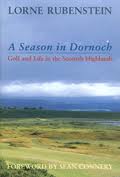
But my favorite of all these is “A Season in Dornoch.”  Written by venerable golf writer, Lorne Rubenstein, with a foreward by Sean Connery, the short, readable book (242 pages) details Mr. Rubenstein’s four-month sojourn in Dornoch, a Scottish village in the north of the country near the North Sea.
 
Among other things, Dornoch is home to one of my very favorite golf courses in all of the world, Royal Dornoch, that has captured the fancy of pros and amateurs alike for hundreds of years.
 
It can be difficult to explain the attraction of the place, given the weather which, near the North Sea, is often cold and rainy.  In other words, great golf weather!  If you are in Scotland, you don’t ask what the weather’s like — you go play whatever the conditions.
 
In “A Season in Dornoch,” One long-time resident, Mr. Richard Butterworth, explains the attraction this way:  “Dornoch is an extraordinary place.  People do find something here.  It’s difficult to explain.”  Hiw wife Brora (named after another golf course in the north of Scotland) goes on:  “As long as we have been here, we still are often surprised by what we find.  You’re walking and you come upon something beautiful, something you didn’t expect.”
 
Mr. Rubenstein, the author, makes the same kind of statements about the place he loves.
 
He was drawn to a season in Dornoch as an alternative, albeit temporary one, to his busy life in his home, Toronto, Canada, and his summer home in Jupiter, Florida.  He wrote about what it was like to set foot on Dornoch and, as famous pro golfer Tom Watson (another Dornoch devotee) said, “Think about your foot falls on the ground of the course and have that influence how you play.”  For Mr. Rubenstein, his time in Dornoch was, with his wife, Nell, a time to slow down, meet neighbors, reflect on life and enjoy a “wee dram” of Scottish whiskey which, he said, would warm you all over.
 
For about the 10th time, I am reading “A Season in Dornoch” again and trying to have the story prompt me to slow down and enjoy life in a more reflective state, including on the golf course, despite the win, cold and rain.
 
Beyond “A Season in Dornoch,” my golf library also includes these books which form, with apologies to David Letterman, my “Top 10 List:”
 
1.  “A Season in Dornoch.”
 
2.  “Open,” an account by acclaimed golf writer John Feinstein of the time the United States Golf Association decided to play the U.S. Open for the first time at a “public course,” Bethpage Black in New York.
 
3.  “Playing Partners:  A Father, a Son and Their Shared Addiction to Golf,” a book by George Peper, now the editor of Links Magazine, who spent five years in a sojourn at the Old Course in St. Andrews, Scotland.  His book reminds me of the good times my son, Eric, and I have had on the golf course for nearly 30 years.
 
4.  “Zinger: A Champion’s Story of Determination, Courage and Charging Back,” a first-person account by pro golf Paul Azinger of his battle — a successful one — to recover from cancer, including the spiritual dimensions of the recovery.
 
5.  “Playing Through:  A Year of Life and Links Along the Scottish Coast,” a book by Curtis (pronounced “Cartis” by the Scots) Gillespie, my second favorite book about golf in Scotland.
 
6.  “Payne Stewart,” a book by Mr. Stewart about his life, which ended tragically in a plane crash.
 
7.  “Tales from Q School,” another book by Mr. Feinstein which chronicles and trials and tribulations of pro players trying to make it onto the PGA Tour.
 
8.  “Ben Hogan:  An American Life,” a book by another famous golf writer, James Dodson, that chronicles the life of one of golf’s greats.
 
9.  “The Mulligan,” a book by Ken Blanchard and Wally Armstrong that talks about second chances in life based on the word “mulligan,” which means, in golf, you get a do-over.  Sometimes life gives you do-overs, too.
 
10. “The Greatest Game Ever Played:  Harry Vardon, Francis Ouimet and the Birth of Modern Golf,” a book by acclaimed golf writer Mark Frost.
 
Well, that’s enough for now.  Good reads all.  But, I need to end this blog because I have a tee time in a few minutes.
 
*************
 
[The author is Dave Fiskum, an addicted golfer, which should be obvious by the foregoing.  He has the good fortune to be married to an understanding wife, Nancy, two kids who play golf, Eric and Lissy (Eric being the best of the bunch) and a golfing dog, Hogan, named after the golfer in #8 above.  All of them have spent a lot of worthwhile time in pursuit of the “Greatest Game Ever Played.”]